Is TiZO a good sunscreen? On the criteria dermatologists actually use — broad-spectrum coverage, SPF above 30, a mineral filter, and a texture you will genuinely reapply — yes, and the whole TiZO line clears that bar at SPF 40. The more useful question is which TiZO, because the four we carry are not interchangeable: two are tinted, two are not, and that single choice matters more than most people realise if you are managing dark spots. Daily SPF is also the single most important thing you can do to protect results from any hyperpigmentation and melasma treatment in Montréal — without it, pigmentation work undoes itself. Below: what TiZO is, TiZO2 versus TiZO3, tinted versus non-tinted, how much to actually apply, what sunscreen cannot do, and current Canadian pricing.
“The best sunscreen is the one you will still be wearing in November.”The IPL Lab sun-protection philosophy
✦ The short answer
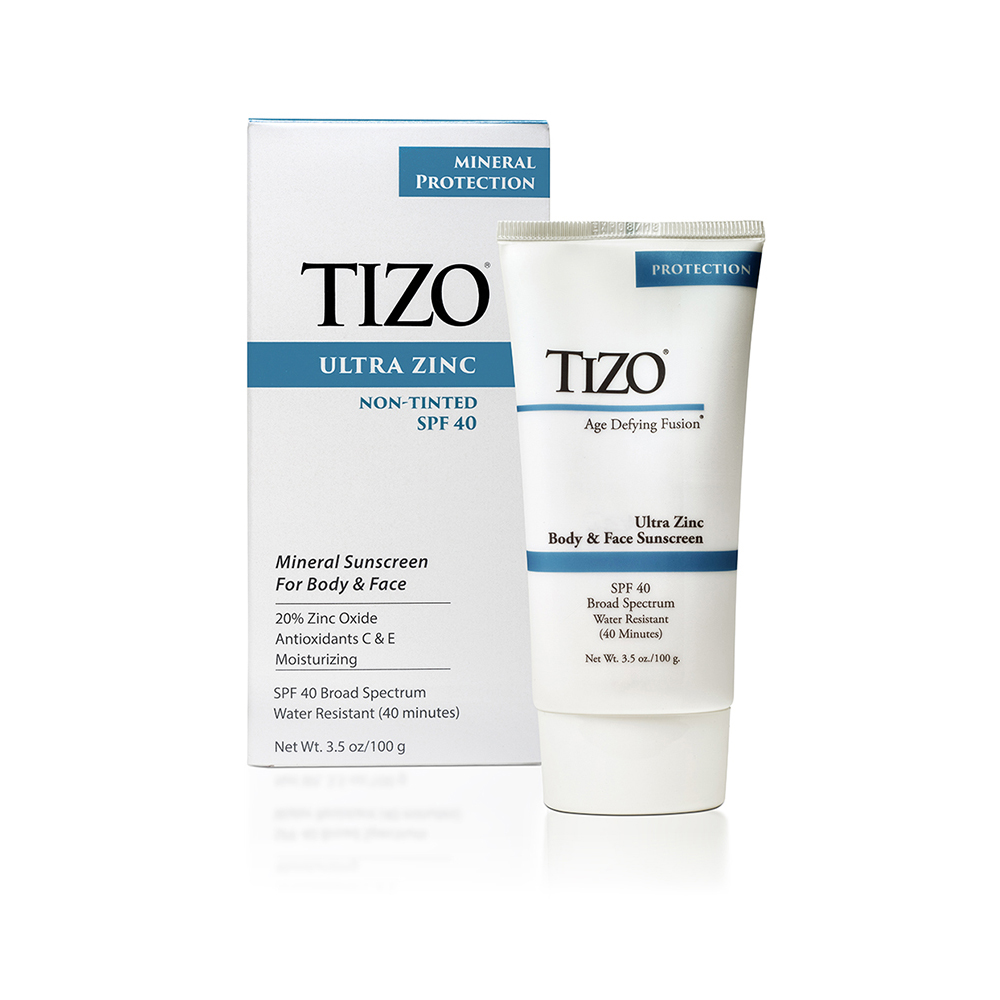
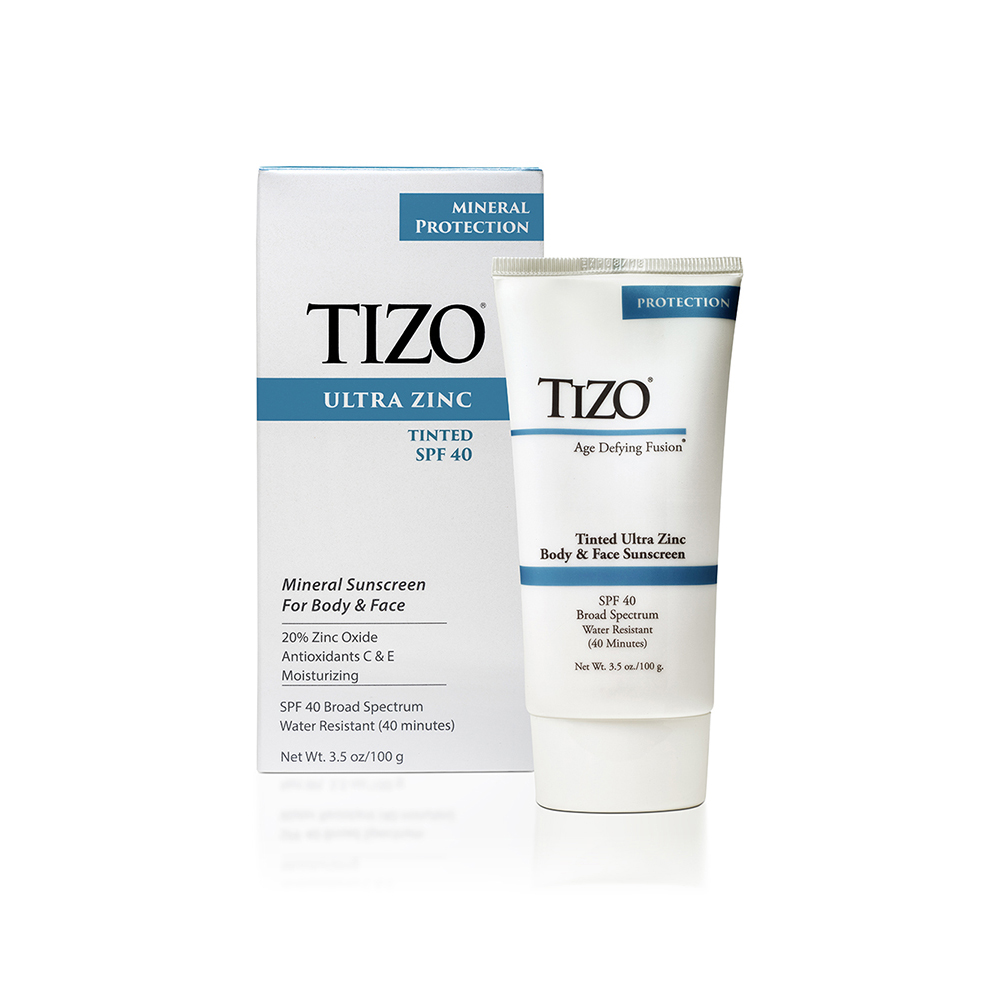
TiZO is a mineral (zinc-based) sunscreen line at SPF 40, which puts it above the SPF 30 minimum dermatologists recommend and in the category advised for sensitive skin. Four options: TIZO2 (non-tinted primer + sunscreen, $69), TIZO3 (tinted primer + sunscreen, $79), Ultra Zinc ($69) and Ultra Zinc Tinted ($79). If pigmentation is your concern, go tinted — the AAD notes tinted formulas containing iron oxide also shield against visible light, which plain SPF does not. Reapply every two hours outdoors, whatever you choose.
What this article covers
Is TiZO actually a good sunscreen?
Judged against the standard rather than the marketing: yes. The American Academy of Dermatology’s guidance is to choose a sunscreen that is SPF 30 or higher, broad-spectrum, and water resistant. TiZO sits at SPF 40 across the line and uses a mineral filter, so it satisfies the first two comfortably — check the label for water-resistance claims on the specific formula you pick.
Where it earns its reputation is texture. The honest failure mode of mineral sunscreen is that people stop wearing it: it can feel heavy and leave a white cast. TiZO’s positioning is a mineral formula cosmetically pleasant enough for daily face use, and two of the four double as a makeup primer. That matters more than any spec sheet, because a sunscreen you skip on cloudy days protects nothing.
What does “mineral sunscreen” mean, and who does it suit?
It refers to the active ingredient. Per the AAD, if the active is titanium dioxide, zinc oxide, or both, you have a physical — also called mineral — sunscreen, and dermatologists recommend that category for people with sensitive skin. If neither is present, it is a chemical sunscreen. Both types work; they are not a safe-versus-unsafe choice, whatever social media suggests.
🪨
Mineral suits you if
Your skin is reactive, rosacea-prone or eczema-prone, you have had stinging from other sunscreens, or you are applying over freshly treated skin.
⏱
The practical trade-off
Mineral formulas take more effort to blend evenly, and on deeper skin tones a non-tinted mineral can leave a visible cast. A tinted version usually solves this.
🧴
After a treatment
Freshly exfoliated or lasered skin is more sun-sensitive, and mineral filters are the usual recommendation for that window. Ask at your appointment.
🇨🇦
Regulated product
Sunscreens sold in Canada are regulated by Health Canada and carry a DIN or NPN number on the label — worth a glance on anything bought abroad or online.
TIZO2 vs TIZO3: what is the difference?
This is the most searched TiZO question, and the answer is short: tint. Both are SPF 40 mineral primer-and-sunscreen hybrids; TIZO2 is non-tinted, TIZO3 is tinted. Same job, same protection level, different finish.
| TIZO2 | TIZO3 | |
|---|---|---|
| Tint | Non-tinted | Tinted |
| SPF | 40 | 40 |
| Filter type | Mineral | Mineral |
| Doubles as primer | Yes | Yes |
| Best for | Under makeup, or if you want zero colour | Evening out tone; pigmentation-prone skin |
| Price | $69 | $79 |
If you wear foundation anyway, TIZO2 keeps your colour matching under your control. If you would rather skip foundation on ordinary days, TIZO3 replaces both steps.
Tinted or non-tinted — which should you choose?
For most people it is a cosmetic preference. For anyone dealing with melasma or dark spots, it is not. The AAD’s position is that a tinted sunscreen containing iron oxide gives better protection against developing dark spots, because iron oxide shields against the sun’s visible light — a trigger that ordinary SPF numbers say nothing about, since SPF measures UVB only.
That is the practical reason we steer pigmentation clients toward the tinted options. It is also why SPF matters so much alongside our skin brightening and pico laser work: visible light and UV exposure between sessions are what undo the gains. Check the active-ingredient panel of whichever tinted formula you choose to confirm iron oxides are in it — and if you are unsure, ask us and we will read the label with you.
Ultra Zinc or the primer line?
Two families, and the split is roughly about what else you want the product to do:
Formulations differ in more detail than a blog post should claim on your behalf — the active-ingredient panel is listed on each product page, and we would rather you read it than take our summary as gospel.
How much do you actually need, and how often?
Almost everyone under-applies, which quietly turns an SPF 40 into something much lower. The AAD’s numbers are worth memorising:
How much
When to apply
How often to reapply
When to wear it
What sunscreen cannot do
Worth being direct, because sunscreen gets sold as more than it is. SPF prevents further pigment damage; it does not clear existing dark spots. If you already have melasma or sun spots, daily sunscreen is the foundation that makes treatment work — not the treatment. Nor does any sunscreen make sun exposure risk-free: shade and clothing do more than a bottle can, and reapplication is where most protection is actually lost.
It also is not a substitute for a professional assessment. If a spot is changing shape, colour or size, that is a dermatologist question, not a skincare one. For pigmentation you want actively improved rather than held steady, our professional facial and pigmentation options are the active side of the plan, with SPF protecting the results.
What does TiZO cost, and where can you buy it in Canada?
All four are stocked in our online store and at both clinics, shipped within Canada — no cross-border ordering or customs. Current pricing:
Best for pigmentation
TIZO3 Primer / Sunscreen — Tinted
$79
Prices were current at the last review date and can change — confirm on each product page. Members save on retail products through our membership program.
What makes buying TiZO at IPL Lab different?
Mostly that you can ask someone which one to buy, and get an answer based on your skin rather than on what is in stock. We match the tinted-versus-not choice to whether pigmentation is a live concern, we tell you when a cheaper drugstore mineral SPF would serve you just as well, and if you are mid-course on a pigmentation or laser plan we will tell you which formula to use in that window. You will find the line at our medispa in Montréal’s Plateau and our medispa in Laval.
Medical disclaimer: this article is for general information only and is not medical advice. Sunscreen reduces but does not eliminate sun-damage risk. Prices were current at the last review date. Consult a qualified professional about pigmentation concerns, and see a dermatologist promptly about any mole or spot that is changing.
IPL Lab Medispa
Locations
Two clinics — one in Montréal, one in Laval — both stocking professional skincare and offering our full range of medical spa treatments, with street and free parking nearby.
📍 Montréal — Plateau
In the heart of the Plateau, street parking nearby
📍 Laval
Easy access, free parking
Book online
Medical spa
- ✓ Free consultation & skin analysis
- ✓ Two locations — Montréal & Laval
- ✓ Trained estheticians
- ✓ Flexible packages & memberships
Book a free consultation, explore our services, take advantage of package deals in our online store, and discover our flexible memberships. Looking to advance your career? Explore our aesthetic school.