Does IPL work on sun spots? For flat brown spots and diffuse redness left behind by a Québec summer, yes — IPL is one of the most reliable tools available, and it is usually the first thing we reach for. What it does not do is treat every kind of pigment, and it is not the strongest option for stubborn deep spots. That is why our hyperpigmentation and melasma Montreal program runs three different technologies rather than one, and matches the device to the mark.
“The question is never which machine is best. It is which machine matches the pigment you actually have.”The IPL Lab pigmentation philosophy
✦ The short answer
IPL works well on flat brown sun spots and redness in one pass, from $80/session in a 10-session package. The Hollywood Laser Peel is the no-downtime option for dullness and texture, from $90/session. PICO is the pigment specialist for resistant or deeper spots, also from $90/session. Most sun damage needs 3–6 sessions, and none of it should start while you are still tanned.
What this article covers
What three months of UV actually did to your skin
Most of what people call “a summer tan fading unevenly” is three separate problems wearing the same coat. Melanin production has been switched on and stays switched on for weeks after your last beach day, which is why spots often look worse in September than they did in August. Sun exposure also drives visible capillaries and background redness, and it accelerates the collagen breakdown that shows up as crepey texture around the eyes and on the chest.
The Skin Cancer Foundation’s overview of photoaging is worth reading if you want the mechanism in detail. The practical consequence for treatment planning is simple: a device that clears brown pigment does not necessarily do anything for redness, and one that resurfaces texture may not touch a deep spot at all.
Flat brown spots
Sun-induced lentigines and patchy tone across cheeks, forehead, chest and the backs of the hands. These respond fastest, and respond to IPL.
Redness and capillaries
Visible vessels around the nose and cheeks, plus a general flush that makes skin look irritated. Also an IPL target, in the same session.
Texture and fine lines
Rough surface, enlarged pores, crepey skin. Pigment devices do little here — this is where peels and resurfacing earn their place.
Does IPL work on sun spots?
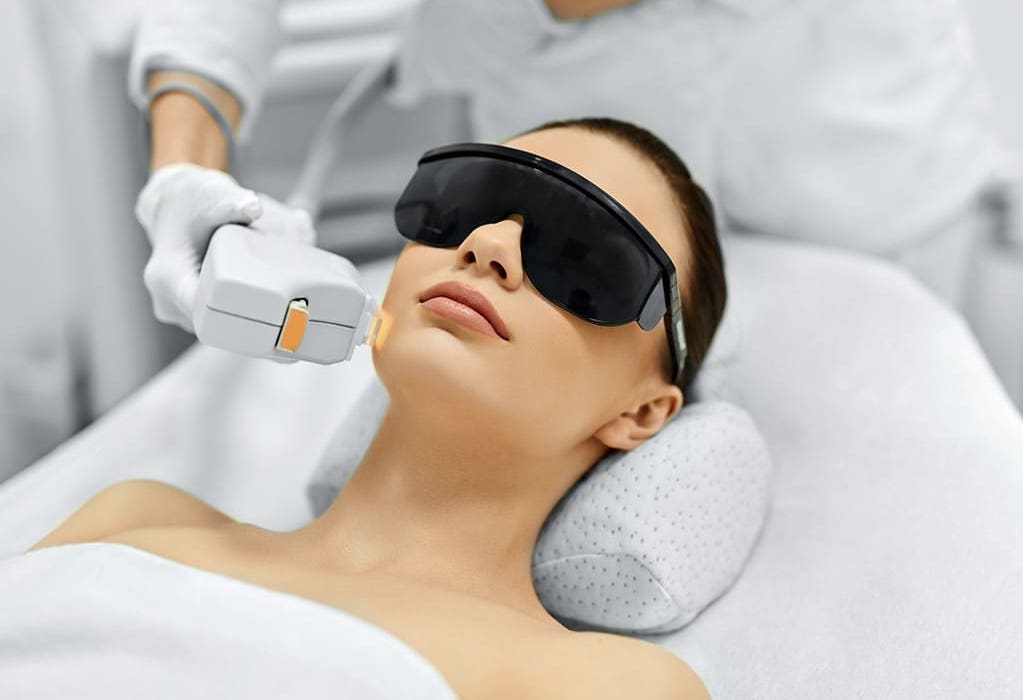
IPL — intense pulsed light — is not a laser. It fires a broad spectrum of light rather than a single wavelength, and filters let us aim that light at two different targets at once: brown pigment and red haemoglobin. That dual action is exactly why it suits post-summer skin, because post-summer skin usually has both.
On flat brown spots the sequence is visible and slightly alarming the first time. Treated spots darken over two to four days, look like coffee grounds, then flake away. Redness settles more gradually across sessions. For a typical Québec summer’s worth of damage, expect meaningful clearing over three to six sessions spaced three to four weeks apart, not after one.
Where the Hollywood Laser Peel fits instead
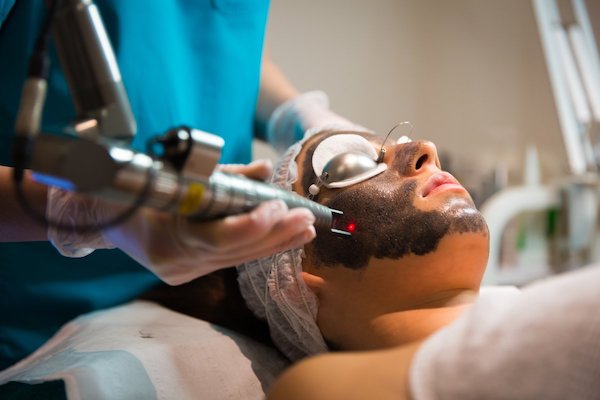
The Hollywood Laser Peel — you will also see it called a carbon peel or carbon laser facial — works differently. A layer of liquid carbon is applied, it settles into pores and binds to surface debris, and a laser pass then shatters and removes the carbon along with dead cells and oil. There is no downtime at all, and the glow is immediate, which is why it is the one people book before an event.
What it is genuinely good at: dullness, congestion, oiliness, enlarged pores, and overall brightness. What it is not: a treatment for a specific deep brown spot. We cover this in more depth in our carbon peel FAQ, including the important caveat that carbon peels are not a reliable melasma treatment and can sometimes make melasma worse.
PICO: the pigment specialist
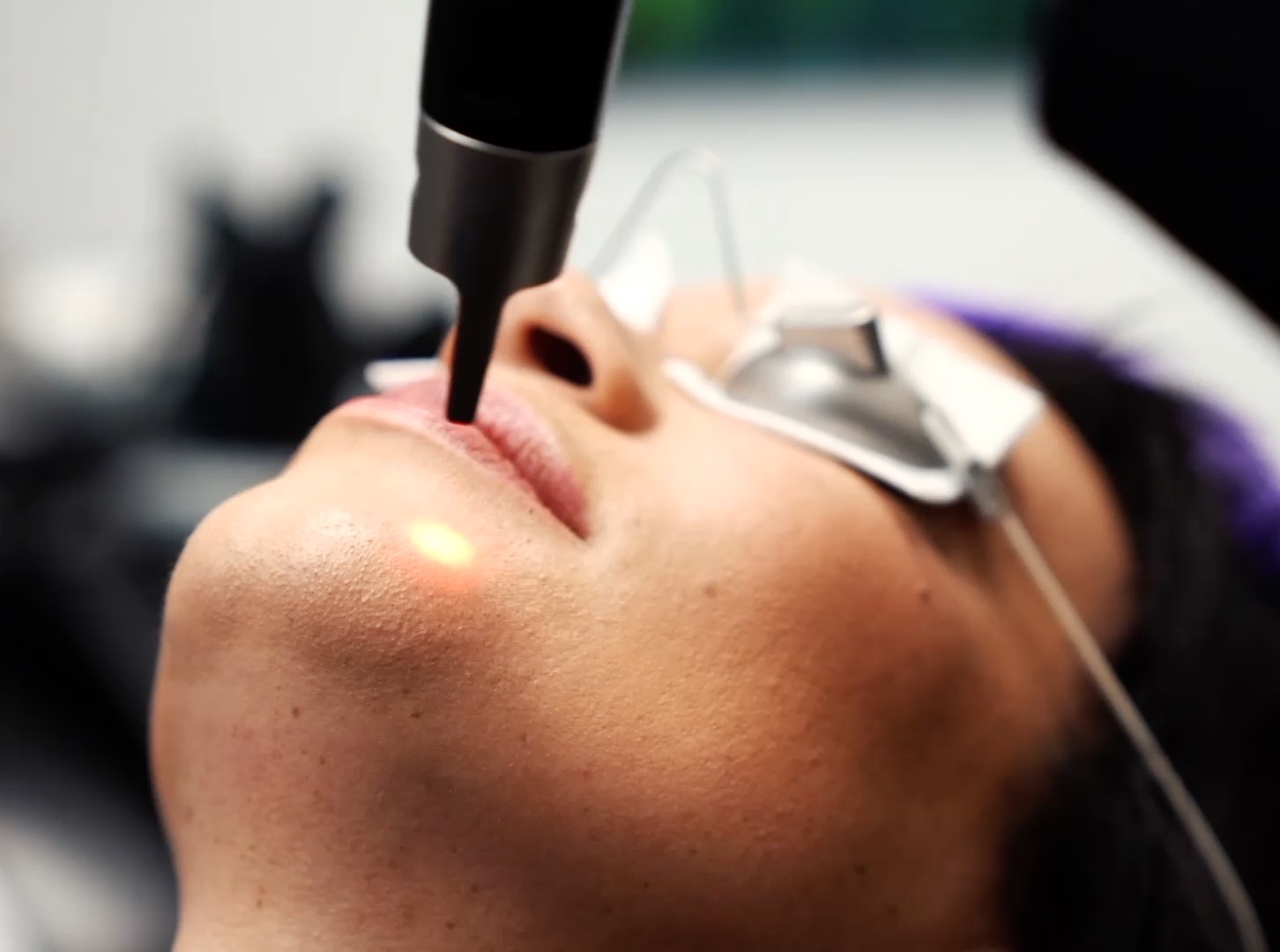
Picosecond lasers deliver pulses roughly a thousand times shorter than older Q-switched devices. The effect is photomechanical rather than photothermal — the pigment is shattered into finer fragments rather than heated — which means less heat delivered to surrounding skin and a lower risk of post-inflammatory hyperpigmentation on Fitzpatrick IV–VI skin.
In practice that makes PICO our choice when IPL has plateaued, when spots are deeper than they look, or when a client’s skin tone makes us want the gentlest possible thermal load. It is also the platform behind our pico laser rejuvenation work more broadly.
Which one matches your marks?
Start with IPL. It is the only one of the three that addresses brown pigment and vascular redness in the same session, and it is the least expensive per session. Three to six sessions, three to four weeks apart. If brown clears but redness lingers, we continue on redness alone rather than switching devices.
Hollywood Laser Peel. If your complaint is “my skin looks tired and my pores are worse than in June” rather than “I have spots”, this is the match. Zero downtime, immediate brightness, and it stacks well as maintenance between pigment sessions.
PICO. For spots that survived a full IPL course, pigment that sits deeper, or darker skin tones where we want minimal heat. Often used as a targeted follow-on rather than a first choice — and it costs more per session than IPL for that reason.
When IPL is the wrong choice — and who should not have it
This matters more than the comparison above, because choosing IPL for the wrong pigment wastes both money and weeks.
If your pigment is melasma, not sun spots
If you are still tanned
If you are pregnant or breastfeeding, or on photosensitising medication
If the lesion has changed shape, colour or bled
Why none of this happens in July
Every pigment-clearing technology works by targeting melanin, and every one of them leaves the treated skin temporarily more vulnerable to UV. Running a course through peak summer means fighting fresh sun exposure with one hand while removing pigment with the other. September through April is the honest window in Québec — enough consecutive low-UV weeks to complete a course and hold the result.
That is also why sun protection stops being optional the moment you start. Our note on mineral sunscreen covers what we actually recommend after pigment work, and why a mineral filter is the easier choice on freshly treated skin.
Aftercare, and what results honestly look like
Realistic expectation: substantial improvement in flat brown pigment and a visible reduction in redness over a full course. Not total erasure, not permanence — new exposure creates new pigment, and skin that has had decades of sun does not return to a blank state. Anyone promising otherwise is selling.
What it costs
Current package pricing at both clinics, confirmed at your free consultation. Packages are what most people book, since a single session rarely finishes the job.
Best value
IPL/BBL Photofacial
from $80/session
Popular
Hollywood Laser Peel
from $90/session
PICO Laser Skin Rejuvenation
from $90/session
Pigmentation & Melasma Treatment
from $90/session
Deluxe🇮🇹
Imperfections Deluxe Glass-Skin
from $150/session
V-Bianco Brightening Facial
from $150/session
If you would rather not choose a device yourself, book the consultation and let us look at the actual pigment. You can also browse everything in skin brightening and facial treatments, or read how pigment work pairs with microneedling for texture.
What makes pigment correction at IPL Lab different?
Three things, in order of how much they change your result. We run all three technologies in-house, so the recommendation is not shaped by which device we happen to own. We patch test and check your tan status before every course rather than treating on request. And we say no — to melasma presented as sun damage, to tanned skin, to anything that looks like it needs a physician first.
Both clinics are staffed by trained technicians who document your progress session by session, so the plan adapts to what your skin is actually doing rather than to a template. We do not offer injectables, thread lifts, or surgical procedures; if that is what your goals need, we will tell you.
Ready when you are
Your skin analysis and consultation are always free.
This article is for general information and is not medical advice. Results vary with skin type, the depth and cause of your pigment, and how consistently you protect your skin from UV. Any changing, bleeding or irregular lesion should be assessed by a physician before cosmetic treatment.
IPL Lab Medispa
Locations
Two clinics — one in Montréal, one in Laval — both offering pigmentation treatments, pico laser rejuvenation and our full range of medical spa treatments, with street and free parking nearby.
📍 Montréal — Plateau
In the heart of the Plateau, street parking nearby
📍 Laval
Easy access, free parking
Book online
Medical spa
- ✓ Free consultation & skin analysis
- ✓ Two locations — Montréal & Laval
- ✓ Trained estheticians
- ✓ Flexible packages & memberships
Book a free consultation, explore our services, take advantage of package deals in our online store, and discover our flexible memberships. Looking to advance your career? Explore our aesthetic school.