Which peel is right for your skin depends on three things, in this order: what you want to change, how much downtime you can accept, and how your skin tone responds to heat and acid. “Peel” has become a catch-all word — it now covers a 20-minute lactic acid glow, a medium-depth TCA treatment that sheds for a week, a laser that leaves nothing to peel at all, and a fractional resurfacing session with real recovery. They are not interchangeable, and the wrong one costs you either results or a bad week. This guide walks through every family of peel we see clients ask about, including the laser versions, and sits alongside our facial Montreal menu as the “which one, and why” layer.
“A peel is not a product, it is a depth. Choose the depth your concern actually lives at, and everything else — the acid, the laser, the downtime — follows from that.”The IPL Lab peel philosophy
✦ The short answer
Superficial chemical peels (glycolic, lactic, salicylic, mandelic) are the right call for dullness, mild acne and early sun damage — a series of 3–6, little to no downtime, from $80/session. Medium-depth peels (TCA-based, including our PQAge Evolution) reach fine lines, deeper pigment and acne scarring, with 5–7 days of shedding. Laser peels trade acid for light: the carbon (Hollywood) peel is the zero-downtime option for oil, pores and glow; PICO laser targets pigment and texture; fractional CO2 is the deepest resurfacing we offer and needs 5–10 days of recovery. October to March is peel season in Montréal: no UV to undo the work.
What this article covers
Why depth matters more than the name on the bottle
Every peel does the same fundamental thing: it creates controlled injury to a defined layer of skin so that the body replaces it with newer, better-organised tissue. What separates a lunchtime glow from a week of flaking is simply how far down that injury goes. Dermatologists classify peels by depth rather than by ingredient, and that is the most useful way for you to think about them too. A superficial peel stays in the epidermis; a medium peel reaches the upper dermis, where pigment deposits and fine lines actually live; a deep peel reaches the mid-dermis and is a one-time, physician-only procedure.
🌿
Superficial
Epidermis only. Glycolic, lactic, mandelic, salicylic, enzyme. Pink for a few hours, light flaking in some people. Done in a series every 2–4 weeks.
🔬
Medium
Reaches the upper dermis. TCA 20–35 %, Jessner combinations, modern “no-peel” TCA formulas. Visible shedding for 5–7 days. Spaced 3–9 months apart.
⚕️
Deep
Phenol-croton oil. Mid-dermis. Performed once, under physician care with monitoring. Two to three weeks of healing. Not offered at IPL Lab.
Laser peels follow the same logic, just with light instead of acid. A carbon peel is a superficial treatment, PICO rejuvenation sits between superficial and medium depending on settings, and fractional CO2 resurfacing is a controlled medium-depth injury delivered in microscopic columns. Once you see every option on that one depth scale, the choice stops being a brand comparison and becomes a simple question: how deep is the thing I want gone?

Superficial chemical peels: AHA, BHA, mandelic and enzyme
Superficial peels are the workhorses of a clinic peel menu and, for most people reading this, the right place to start. They loosen the “glue” between dead cells in the outer skin layer, speed up turnover, and brighten tone without the skin ever visibly sheeting off. Results build over a series rather than arriving in one visit. The acid family matters less than people think — but each one has a personality.
🍇
Glycolic (AHA)
The smallest molecule, so it penetrates fastest. Best for dullness, mild sun damage and rough texture on resilient, non-sensitive skin. The most “tingly” of the group.
🥛
Lactic (AHA)
Larger molecule, gentler, hydrating. Our usual starting point for dry, sensitive or rosacea-prone skin and for first-time peel clients.
🫧
Salicylic (BHA)
Oil-soluble, so it goes into the pore. The acne, blackhead and congestion peel — on the face and, at higher strength, on the back.
🌰
Mandelic (AHA)
Slowest-penetrating AHA, with mild antibacterial action. The safest superficial acid for deeper skin tones, where faster acids risk post-inflammatory darkening.
🍍
Enzyme peels
Papaya, pumpkin or pineapple enzymes digest dead cells without acid. No tingle, no flaking. For very reactive skin, or as a maintenance step between stronger peels.
🧪
Blended peels
Most clinic peels are blends — glycolic + salicylic for oily, aging skin, or lactic + mandelic for sensitive pigmented skin. Blends let us hit two concerns at one safe depth.
Expect your skin to look slightly pink and feel tight for the rest of the day, then brighter and smoother by day three. A small number of people flake lightly around the nose and chin for a day or two; most do not. The chemical peel versus microdermabrasion question comes up at this depth constantly — the short version is that microdermabrasion polishes mechanically while a superficial peel works chemically, and the two pair well in alternating visits.
Medium-depth peels: TCA, Jessner and the “no-peel” peel
When the concern lives below the epidermis — established sun spots, melasma that has not responded to superficial work, acne scarring, fine lines around the eyes and mouth — a medium peel is the chemical tool that reaches it. Trichloroacetic acid (TCA) at 20–35 % is the classic agent, often preceded by a Jessner solution to even out penetration. The skin frosts white during treatment, turns darker over 48 hours, and then sheds in sheets between day three and day seven. It is a real treatment with a real week, and the results reflect that.
Classic TCA — the benchmark medium peel. Visible frosting, 5–7 days of shedding, and the broadest evidence base of any medium-depth option for photo-aging and superficial scarring. We reserve it for lighter skin tones (Fitzpatrick I–III) because the post-inflammatory pigmentation risk rises sharply in darker skin. One to three sessions, spaced at least three months apart.
PQAge Evolution — the TCA peel that does not visibly peel. An Italian formula combining TCA with kojic acid and hydrogen peroxide in a carrier that drives the acid into the dermis rather than sitting on the surface. The result is dermal stimulation — firmer, brighter skin, softer fine lines — with minimal shedding and no frost. It is our medium-depth option for people who cannot take a week off their face, and it can be used more safely on medium skin tones than classic TCA. Done as a series of three to six.
V-Bianco — the depigmenting peel protocol. A brightening treatment built around pigment inhibitors rather than brute depth, designed specifically for melasma, post-acne marks and uneven tone where a heat-based treatment would backfire. Mild flaking at most. Three to six sessions, always paired with strict SPF and a home brightening routine. This is the peel we steer melasma clients toward first.

One honest caveat belongs here. A medium peel is not a melasma cure. Melasma is a hormonally driven, light-sensitive condition that returns whenever its triggers return, and aggressive heat or acid can make it darker. The American Academy of Dermatology’s melasma guidance is clear that peels are an adjunct to sun protection and topical therapy, not a replacement — which is exactly how we use them in our hyperpigmentation and melasma program.
Deep peels: what they are, and why we don’t offer them
A deep peel uses phenol and croton oil to reach the mid-dermis in one procedure. It can erase deep wrinkles and severe sun damage in a way no other chemical peel can, and the results last for years. It is also a genuine medical procedure: phenol is absorbed systemically and requires cardiac monitoring, the treatment is done under sedation, healing takes two to three weeks with weeks of redness afterwards, and the skin is permanently lighter — which rules it out for anyone beyond the fairest skin tones. It is performed by dermatologists and plastic surgeons, not medispas, and we would not want it any other way.
So what do you do for deep wrinkles and heavy sun damage?
Are “deep” peels sold at some spas actually deep?
Laser peels: carbon, PICO and fractional CO2
“Laser peel” describes three quite different treatments that share one idea: using light energy instead of acid to trigger renewal. Because the depth and the mechanism are set by the device rather than by how long a liquid sits on the skin, laser peels are more predictable session to session, and the carbon version is the only peel in this article with genuinely zero downtime.
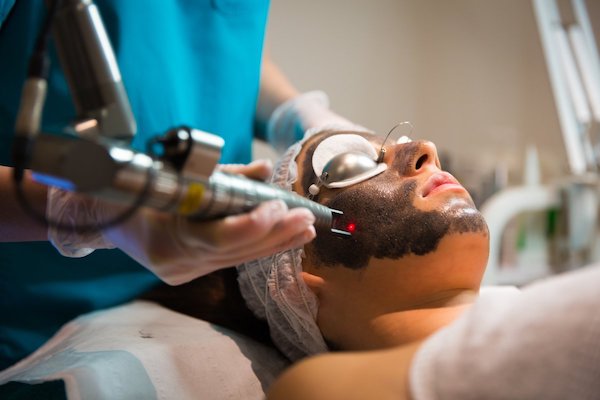
A note on names you will see online. “Hollywood peel” and “carbon peel” are the same treatment; “Hollywood Spectra” is one manufacturer’s branded platform for it, not a different procedure. “Micro laser peel” and “nano laser peel” are marketing terms for light erbium or fractional passes, which fall between PICO and CO2 on the depth scale. When a clinic uses a trademark, ask which device it actually runs and what depth it is set to — that tells you more than the name does.
Which peel for which concern
This is the table most people actually want. It reflects how we match peels at consultation, not what sounds most impressive — and it assumes you have realistic expectations about what a series can and cannot do.
😶🌫️
Dull, tired, “winter” skin
Superficial lactic or glycolic series, or a carbon peel for an instant event-ready glow. Alternate with an oxygen or hydradermabrasion facial if you want zero flaking at all.
🫥
Active acne & congestion
Salicylic peels on the face; a stronger salicylic/TCA protocol for back acne. Carbon peel as the oil-control option. Coordinate with our acne treatment program if lesions are inflamed.
🌞
Sun spots & uneven tone
PICO laser for discrete spots, PQAge or V-Bianco for diffuse tone. Superficial peels first if the skin is reactive. See our guide to skin after summer.
🎭
Melasma
V-Bianco protocol plus topical brightening and daily SPF. Low-energy PICO only after pigment is stable. No carbon peel, no aggressive TCA, no CO2 — heat makes melasma worse.
🕳️
Acne scars & texture
Fractional CO2 for pitted scars on lighter skin; PICO series for shallow scars and all skin tones; medium peels for surface texture. Often combined with microneedling.
⏳
Fine lines & early aging
PQAge series for dermal firming without downtime; classic TCA or fractional CO2 for deeper lines. Glycolic maintenance in between.
Skin tone runs through every row of that table. The deeper the natural pigment, the more carefully heat and acid need to be dosed, because the melanocytes respond to irritation by producing more pigment — the post-inflammatory hyperpigmentation that turns a good peel into a six-month problem. For Fitzpatrick IV–VI skin we start with mandelic or lactic acids, build tolerance, and favour PICO at conservative settings over any TCA or CO2 approach. That is not caution for its own sake; it is the difference between an even result and a patchy one.
Downtime, timing, and why October is peel season
Peel recovery is measured in days of visible flaking and weeks of sun sensitivity, and both numbers climb with depth. The one rule that applies to every option in this article is that the new skin a peel reveals burns and pigments far more easily than the skin it replaced. That is why Montréal’s dark half of the year is the natural peel window: from October through March the UV index sits low enough that a daily SPF 30 actually covers the risk, and there are no beach weeks or patio afternoons to tempt you.
Two practical timing rules. First, stop retinoids, vitamin C acids and any exfoliating product five to seven days before a medium peel or laser session, and tell us about any prescription tretinoin. Second, book medium and laser peels at least three weeks before an event, and superficial peels at least three days before — the glow peaks on day three, not day one. Our AI skin analysis at consultation also lets us photograph pigment and texture under cross-polarised light, so we can track what a series is actually changing rather than guessing from a mirror.
Who should not peel — or should wait
A clinic that says “this is not for you” is one you can trust with the times it says yes. These are the situations where we postpone or decline, regardless of how much you want the treatment.
Isotretinoin (Accutane) in the past 6–12 months
Pregnancy or breastfeeding
Active cold sores, eczema, psoriasis or open acne lesions on the treatment area
Recent sun exposure or a tan
History of keloids or hypertrophic scars
Darker skin tones (Fitzpatrick V–VI) wanting TCA or CO2
Unrealistic expectations
How many sessions, and what it costs
Superficial and laser peels are bought as a series because the result is cumulative: each session builds on the renewal the last one started. Three sessions is the honest minimum to judge a result; six is where most skin concerns reach their plateau; ten is for maintenance clients who alternate peels through the winter. Medium peels are spaced further apart and need fewer visits. Current package pricing at both clinics is below, confirmed at your free consultation — fractional CO2 is assessed and quoted individually at consultation rather than sold as a package.
Popular
Chemical peel package
from $80/session
Deluxe · Italy🇮🇹
PQAge Evolution peel
from $90/session
Melasma protocol
V-Bianco brightening peel
from $150/session
Zero downtime
Hollywood carbon laser peel
from $90/session
Pigment & texture
PICO laser skin rejuvenation
from $90/session
Body peel
Back acne treatment
from $90/session
Every package is valid at both clinics and can be split between family members. Members save on every session through our membership, and the full range is in the online store.
What makes a peel at IPL Lab different?
Three things, none of them glamorous. First, we classify by depth and skin tone before we ever name a product, so you are never sold the strongest peel in the room — you are offered the one your concern actually needs. Second, chemical and laser peels live under one roof, which means the comparison in this article is a real choice at the consultation table rather than a sales pitch for whichever device a clinic happens to own. Third, every series starts with a free consultation and skin analysis, and we photograph pigment and texture so that “it’s working” is something you can see on a screen in week six, not something you have to take on faith.
Peel season is open
Your skin analysis and consultation are always free.
Sources: American Academy of Dermatology — chemical peels overview · Cleveland Clinic — laser skin resurfacing · American Academy of Dermatology — melasma diagnosis and treatment
Medical disclaimer: this article is for general information only and is not medical advice. Results vary with skin type, concern, sun exposure and aftercare. Peels and lasers are not suitable for everyone; a consultation determines whether a treatment is appropriate for you.
IPL Lab Medispa
Locations
Two clinics — one in Montréal, one in Laval — both offering chemical peels, laser peels and our full range of medical spa treatments, with street and free parking nearby.
📍 Montréal — Plateau
In the heart of the Plateau, street parking nearby
📍 Laval
Easy access, free parking
Book online
Medical spa
- ✓ Free consultation & skin analysis
- ✓ Two locations — Montréal & Laval
- ✓ Chemical and laser peels under one roof
- ✓ Flexible packages & memberships
Book a free consultation, explore our services, take advantage of package deals in our online store, and discover our flexible memberships. Looking to advance your career? Explore our aesthetic school.